The hearts arterial supply is derived from the right and left coronary arteries which are the branches of ascending aorta. Blood vessels that supply the muscle of the heart myocardium.
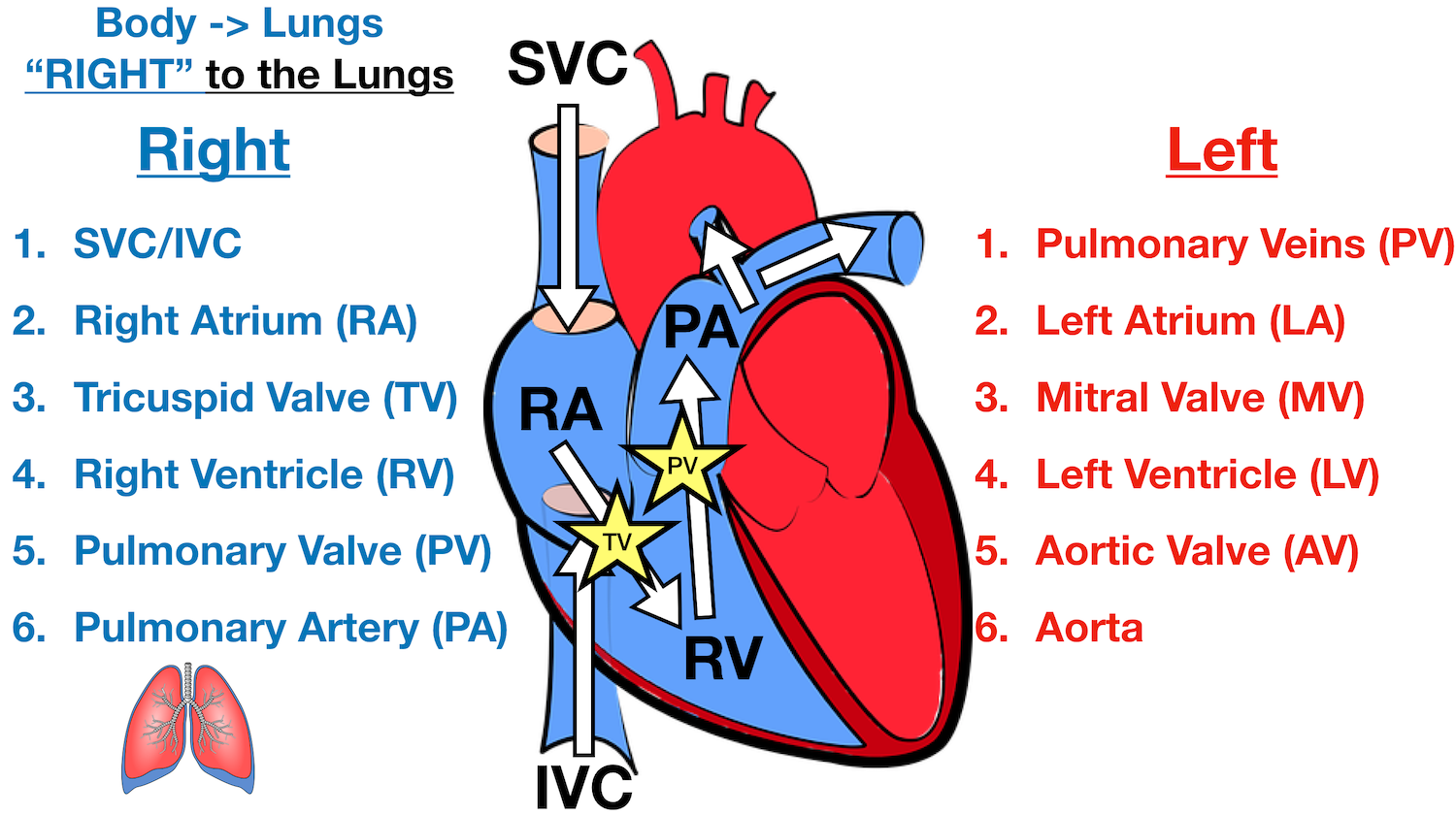
Blood Flow Through The Heart Step By Step Diagram
Carries deoxygenated blood from the heart to the lungs.

. The blood first enters the right atrium. The system of blood vessels resembles a tree. The blood supply of the heart is also known as coronary circulation and the artery that supplies blood to the heart is known as the coronary artery.
The coronary arteries are a set of arteries that branch off the aorta and are located on the heart. Because of the watertight lining of the heart the endocardium and the thickness of the myocardium the heart cannot depend on the blood contained in its own chambers for oxygen and nourishment. The right side of the heart receives blood that is low in oxygen because most has been used up by the brain and body.
The heart is made of four chambers which receive and pump blood. Left Main Coronary Artery also called the left main trunk. Valveless communications with the capillary beds of the myocardium and may carry blood from heart chambers to myocardium.
Carries deoxygenated blood from the body back to the heart. The term coronary was first conceived to describe a crown-like arrangement of the arterial blood vessels supplying the heart muscle. If the heart is considered as an upside-down cone with the flat base placed at the level of the atrioventricular groove then the coronary arteries may be visualized as a ring at the base of the cone with branches which pass towards.
Blood enters the heart through two large veins the inferior and superior vena cava emptying oxygen-poor blood from the body into the right atrium. In the most common distribution this comprises two major coronary. There are two main coronary arteries which branch to supply the entire heart.
They are named the. Cardiac veins then drain away the blood after it has been deoxygenated. Blood Supply to Heart Tissue.
Gas exchange occurs in these small blood vessels. The arteries carry blood away from the heart. When the heart beats the ventricle pushes blood through the.
This is a tutorial on the vascular supply to the heart. Describe the arterial supply of heart. The heart is the four-chambered organ.
Blood supply to the heart. The heart receives its own supply of blood from the coronary arteries. When the coronary arteries are clogged by excessive fatty tissue in cholesterol it can lead to a lack of nutrients and oxygen for the heart whose cells begin to perish and this leads to a heart attack.
They are the main blood vessels that carry the deoxygenated venous blood from the rest of the body to the right side of the heart specifically the right atrium. The veins carry it back to the heart. These arteries and their branches supply all parts of the heart muscle with blood.
Two major coronary arteries branch off from the aorta near the point where the aorta and the left ventricle meet. There needs to be adequate circulation of blood in the lungs for enough oxygen to get to the tissues and any compromise to the blood supply to the lungs immediately decreases the partial pressure of oxygen in the blood. The blood then flows through the tricuspid valve into the right ventricle.
Left Side The pulmonary vein empties oxygen-rich blood from the lungs into the left atrium. In the heart the two circuits of the circulatory system pulmonary and systemic circulation converge. The human blood circulatory system is a complex mechanism consisting of four muscular pump chambers and a lot of channels.
Blood thats received from the lungs into the left side of the heart is pumped. Blood vessel Function. Pericardiacophrenic artery a branch of the internal thoracic artery which may accompany or parallel the phrenic nerve to the diaphragm.
The superior vena cava is located superiorly and it carries the deoxygenated venous blood from the upper body to the right atrium. The heart receives its own supply of blood from the coronary arteries. Before blood flows to the various parts of the body it circulates in the heart and passes through the lungsIn this article we will describe thepath of blood through the heart.
What is the main arterial supply of the pericardium and where does it pass. Branch off the aorta. It is divided into two atria and two ventricles.
It pumps this to your lungs where it picks up a fresh supply of oxygen. Coronary arteries supply oxygenated blood to the heart muscle. Much of the blood supplied by the bronchial arteries returns to the heart via the pulmonary veins.
They carry oxygenated blood and nutrients to nourish the heart tissue cells. The trunk the main artery aorta branches into. The vessels that provide the organs with blood are called arteries.
It consists of the heart and the blood vessels running through the entire body. Any of the fine branching blood vessels that form a network between the arterioles and venules. Two major coronary arteries branch off from the aorta near the point where the aorta and the left ventricle meet.
These arteries and their branches supply all parts of the heart muscle with blood. The blood then returns to the left side of the heart ready to be pumped back out to the brain and the rest of your body. The term coronary was first conceived to describe a crown-like arrangement of the arterial blood vessels supplying the heart muscle.
Because the rest of the body and most especially the brain needs a steady supply of oxygenated blood that is free of all but the slightest interruptions the. Here are the steps of blood flow through the heart and lungs. If the heart is considered as an upside-down cone with the flat base placed at the level of the atrioventricular groove then the coronary arteries may be visualized as a ring at the base of the cone with branches which pass towards.
Passes forward between the pulmonary trunk and the right auricle. The blood circulatory system cardiovascular system delivers nutrients and oxygen to all cells in the body. Coronary circulation is the circulation of blood in the blood vessels that supply the heart muscle.
Like the rest of the body the heart needs oxygenated blood to function. These include the common carotid artery that carries blood from the heart to. It arises from right anterior aortic sinus.
It possesses a vascular system of its own called the coronary arterial system. Im first going to talk a bit about the arterial supply and then Ill talk about the venous drainage of the heart.

Arterial Supply To The Heart
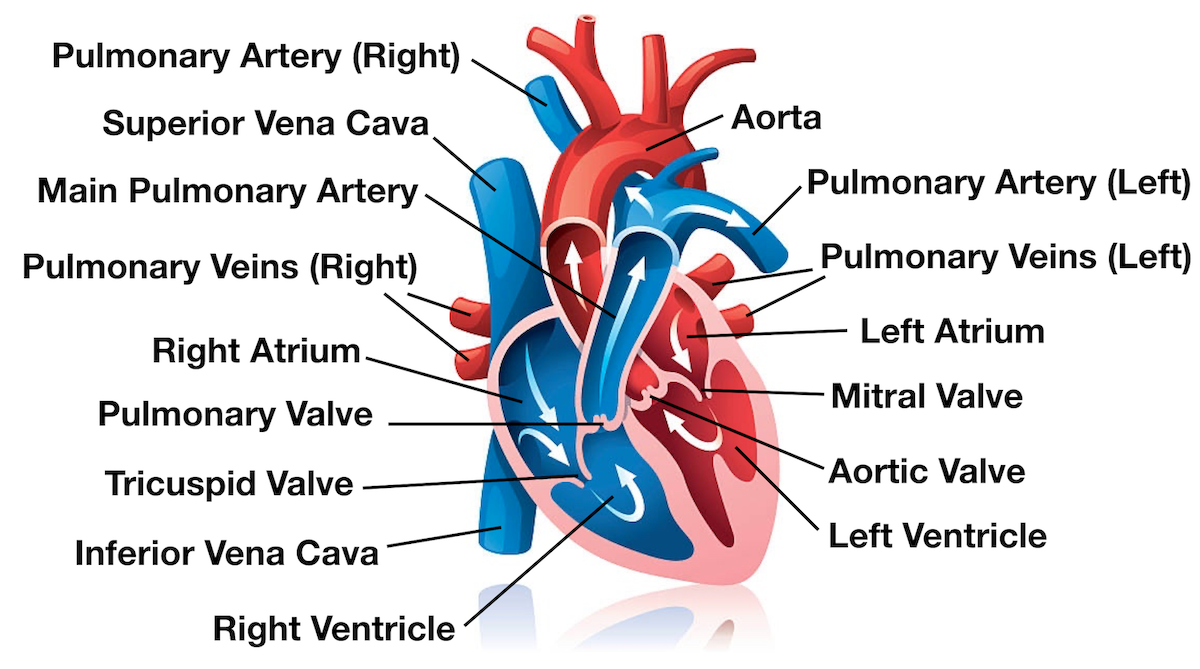
Blood Flow Through The Heart Step By Step Diagram
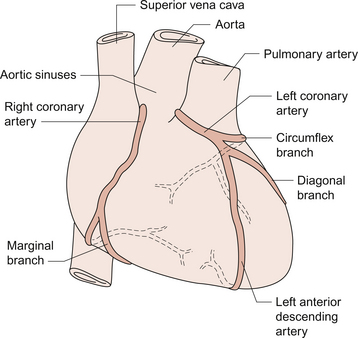
Blood Supply To The Heart Thoracic Key
Cv Physiology Coronary Anatomy And Blood Flow



0 Comments